DVA Presumptive Liability: The Complete 2026 Guide
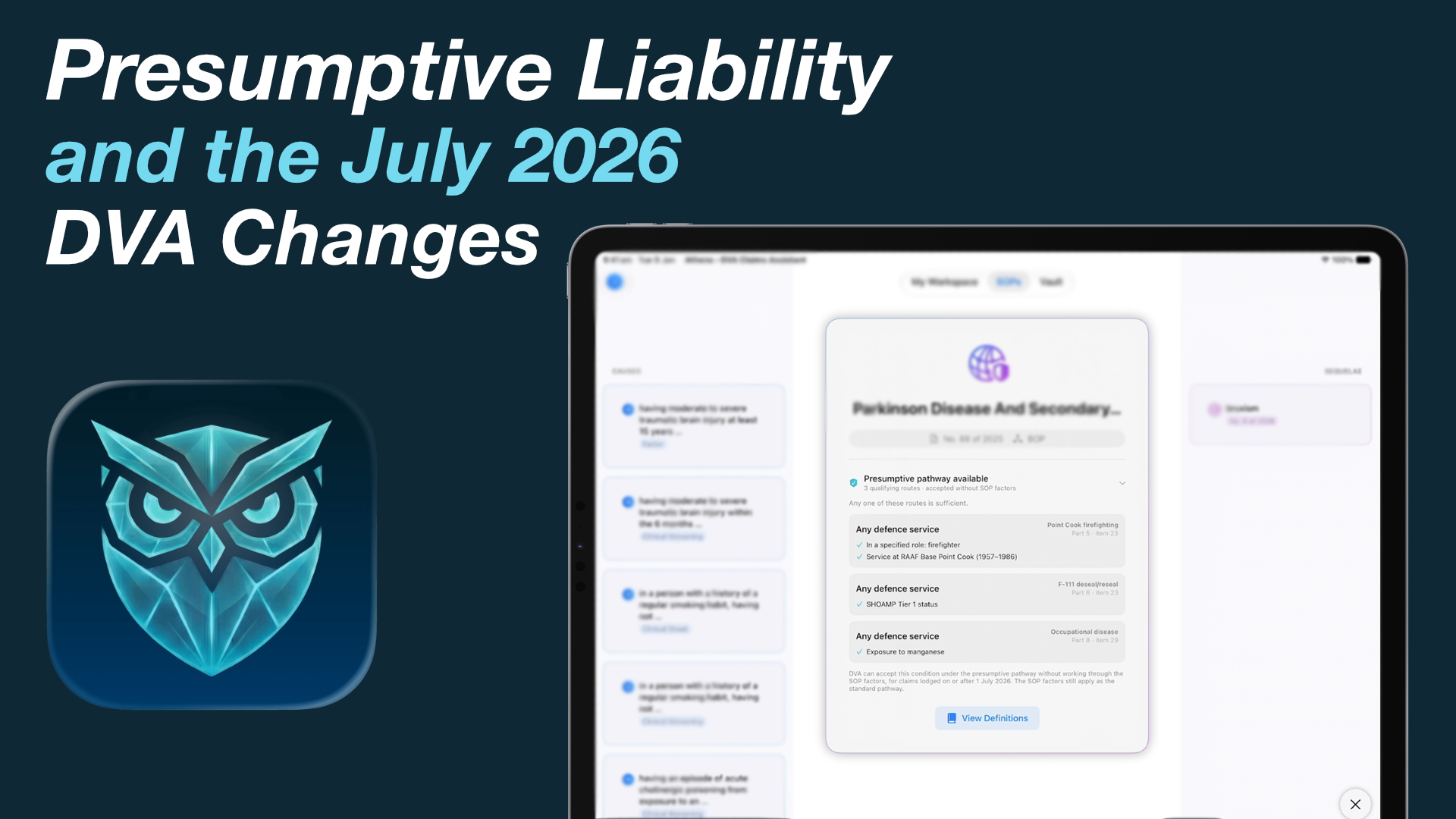
Navigating DVA presumptive liability is critical for claims lodged from 1 July 2026. This guide explains the new legislative changes, the DVA 247 presumptive conditions list, and how to determine whether a veteran qualifies for automatic acceptance without the usual standard of proof. Use this hub as your primary resource for the 2026 rules; dive into the deep-dive guide when you need the full plain-English walkthrough.
New to presumptive liability? Read how it works, in plain English first.
What changed in the DVA legislative changes July 2026?
From 1 July 2026, DVA can accept liability for listed conditions under a presumptive pathway when defined service criteria are met — without applying the usual Statement of Principles standard of proof for those eligible claims. It is a parallel pathway, not a total replacement for SOP-based claiming.
You still need a clear diagnosis and proof that the veteran’s service fits the relevant route. Presumption speeds the liability decision when criteria line up; it does not invent missing medical evidence.
DVA 247 presumptive conditions list — how to use it
The determination schedules 247 listed conditions. Treat public summaries as navigation aids only — the official instrument is authoritative for lodgement advice.
- Confirm the condition name matches the schedule wording
- Confirm the veteran’s service type/route is covered
- Confirm onset and diagnosis timing align with the rules
- If presumptive does not apply, fall back to the relevant RMA SOP
Start here: resources in this hub
Presumptive liability vs Statements of Principles
Presumptive liability can remove the SOP standard-of-proof step for listed, eligible claims. Many veterans will still use SOPs for conditions outside the 247 list, for sequelae strategy, or where service criteria for presumption are not met. Advocates should keep both toolkits ready.
How Athena flags presumptive eligibility — securely on your device
Athena loads the determination alongside the SOP library so you can see when a listed pathway may be open. Eligibility checks return Met, Not Met, or Not Assessable — never guessing at gates that need DVA confirmation. All of it runs privately on your Mac or iPad.
Struggling with this? Download Athena to map your medical records and run presumptive checks securely on your device.
Check presumptive pathways privately
Available exclusively on the App Store.