The Ultimate Guide to DVA Statements of Principles (SOPs)
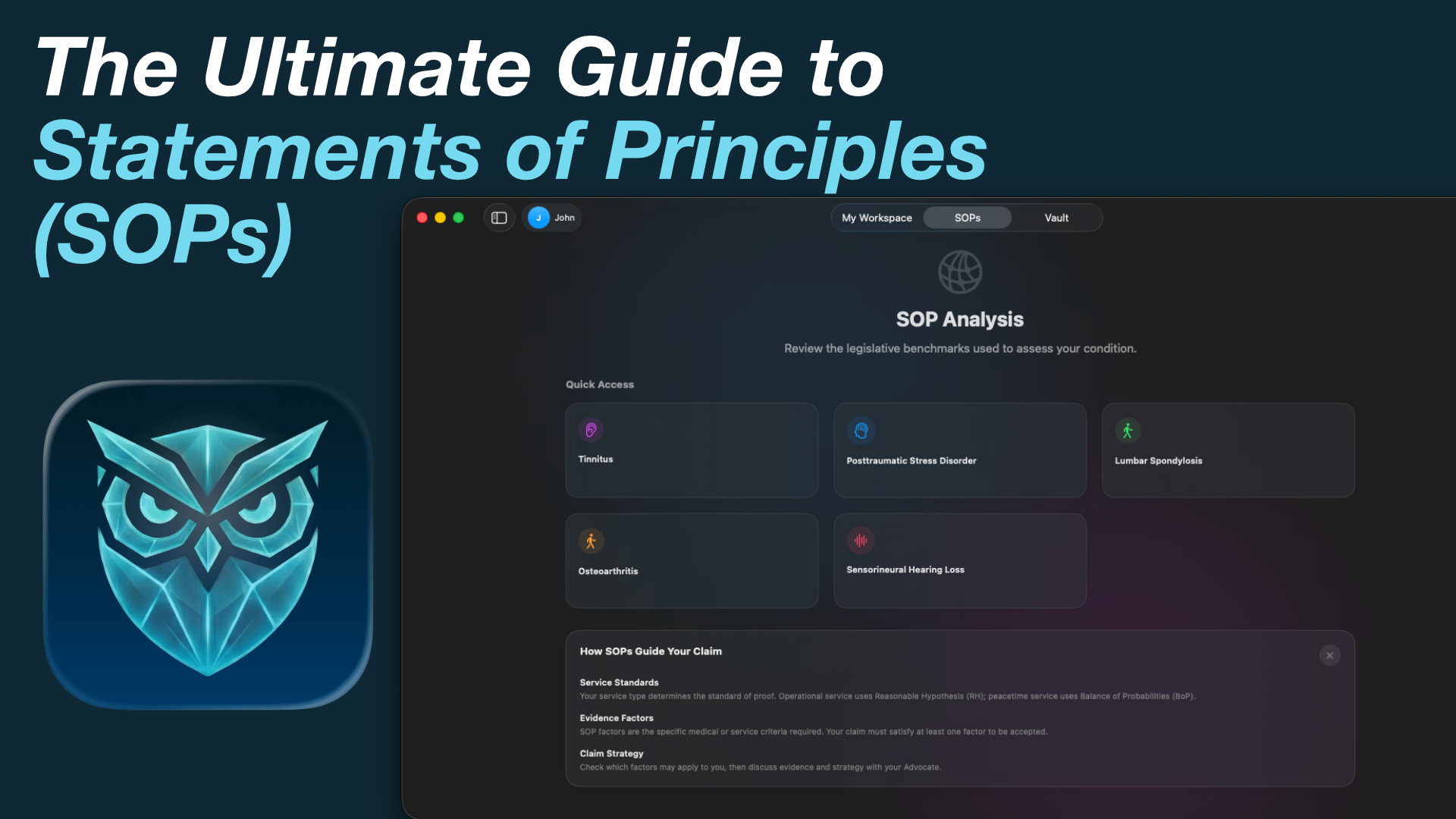
If you're an Australian veteran or an advocate assisting with a DVA (Department of Veterans' Affairs) claim, you'll encounter the term "SOP" frequently. SOPs, or Statements of Principles, are the backbone of the DVA claims process. Understanding them is critical to building a successful claim, but interpreting them can quickly become overwhelming.
In this guide, we'll break down what SOPs are, how to interpret their factors, the challenges of matching medical history to SOPs, and how modern tools can speed up this rigorous process.
What Are SOPs and Why Are They Critical?
The Repatriation Medical Authority (RMA) creates and maintains Statements of Principles. A SOP is a legislative instrument that sets out the factors that must as a minimum exist to cause a particular disease, injury, or death.
In simpler terms: SOPs define exactly what criteria must be met for the DVA to accept that a condition is related to a veteran’s service.
When you submit a claim, the DVA doesn't just look at whether you have a diagnosed condition. They look at whether your service history aligns perfectly with the specific factors listed in the relevant SOP for that condition. If you don't connect your diagnosis to the right SOP factors with solid evidence, your claim will likely be rejected.
There are currently hundreds of SOPs, and they are regularly updated based on the latest medical science.
How to Interpret RMA Factors
Each SOP is divided into distinct sections. The most important section for claimants and advocates contains the "factors." These are the specific events, exposures, or circumstances that must have occurred during a veteran's service.
When interpreting RMA factors, keep these points in mind:
- Exacting Language: SOPs use precise medical and legal terminology. A "severe psychosocial stressor" has a very specific definition within the SOP itself, which differs from colloquial use.
- Timeframes: Many factors have specific timeframes attached to them (e.g., "experiencing [event] within the two years before the clinical onset"). If your evidence falls outside this window, the factor is not met.
- Standard of Proof: There are two types of SOPs for each condition: one based on the "Reasonable Hypothesis" standard (for operational service), and one based on the "Balance of Probabilities" standard (for peacetime service). You must refer to the correct SOP based on the type of service.
The Challenge of Matching Medical History to SOPs
For advocates and veterans alike, the hardest part of a claim isn't just procuring medical records; it's matching a lifetime of complex medical history against the rigid criteria of the SOPs.
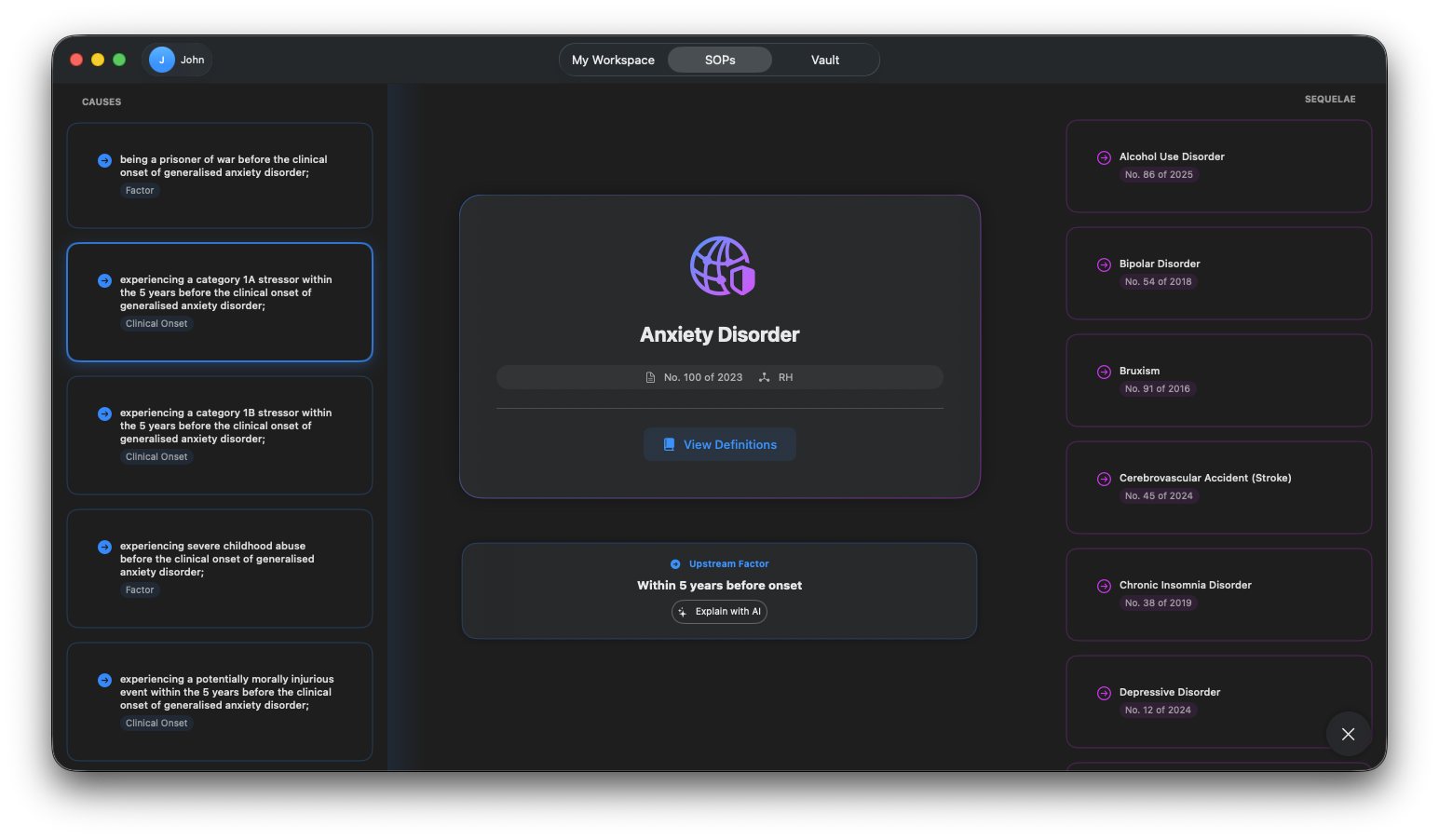
A typical claim file might consist of hundreds of pages of discharge summaries, specialist letters, and GP notes spanning decades. You must manually sift through every page, extract relevant diagnoses and dates, and painstakingly cross-reference them with the relevant SOP factors. Furthermore, you need to understand how conditions interconnect—for instance, how one condition might be an accepted "sequela" (a condition which is the consequence of a previous disease or injury) of another.
This process is incredibly time-consuming and leaves room for human error. A single missed note buried on page 42 of a PDF could mean the difference between an accepted claim and an appeal.
Athena Tie-in: The SOP Navigator
We built Athena because we understood the frustration of wrestling with RMA factors and massive medical files.
Athena features a powerful built-in SOP Navigator. Instead of searching the RMA website or thumbing through printed binders, you can quickly search through the full library of 742 pre-loaded SOPs directly on your device.
With Athena's SOP Navigator, you can:
- Instantly Access Definitions: Tap any specialized term within a SOP to instantly see its legal and medical definition, ensuring you're interpreting the factor correctly.
- Discover Sequelae Conditions: Quickly view linked (sequelae) conditions. If a veteran has an accepted condition, Athena helps you identify subsequent related conditions that may also be claimable, ensuring veterans get the full support they are entitled to.
- Stay 100% Private: All of this happens instantly, right on your iPad or M-series Mac. Your search terms, the veteran's condition, and the claim strategy never leave your device.
By taking the friction out of SOP research, Athena lets advocates focus on what matters: building compelling, evidence-backed statements that win claims.
Stop wrestling with PDFs and cloud privacy risks.
Available exclusively on the App Store.